Year 3 Science · AC9S3U02
Under our feet.
Dig a hole in the backyard and you will find soil. Keep digging and you reach rock. Look at the rock through a magnifying glass and you will see it is made of tiny pieces. We grow our food in soil, and we build our homes from rock. In this lesson you will find out how.
What we are learning
How to look closely at rocks, minerals and soils, how to tell them apart, and why people need them.
I can
- 1describe a rock by its colour, how it feels and what I can see close up.
- 2explain that rocks are made of minerals, and test minerals to tell them apart.
- 3describe what is in soil, and how sandy, clay and garden soils are different.
- 4measure how much water drains through soils, show my results in a table and a column graph, and say if my test was fair.
- 5explain why soils, rocks and minerals are important, and how First Nations Australians use them.
Australian Curriculum v9, AC9S3U02: “compare the observable properties of soils, rocks and minerals and investigate why they are important Earth resources”
Soil detectives
Two pages for real soil: shake soil in a jar and watch it settle, look for what is in it, then test which soil holds the most water, with a results table and a column graph to fill in. The same links are at the end of the lesson.
How this lesson works
- Look and sort. Look closely at seven rocks, describe them, and sort them into groups. Later you will do the same with soil.
- Name. Zoom into a rock and give the pieces inside it their names.
- Test. Test six mystery minerals, and three soils, and use your results to work things out.
- Use. Find rocks, minerals and soils in a home, on a map of Australia, and on Country.
- Show what you know. Five questions.
Your answers and notes are saved in this browser, so you can stop and come back.
1Look and sort
Rock detectives.
Scientists who study rocks are called geologists. The first thing a geologist does is look very closely. What colour is the rock? How does it feel? What can you see with a magnifying glass?
Seven rocks on a tray
Tap a rock to look closelySorting hoops
Tap a rock, then tap where it goesA rock that fits both labels goes in the middle, where the hoops overlap. A rock that fits neither goes outside the hoops.
Key idea
We can describe a rock by what we can see and feel: its colour, its texture, and the size of its grains or crystals.
These are called observable properties: things you can find out with your senses and simple tools like a magnifying glass. Geologists use them to sort rocks into groups. Texture means how the rock feels: rough, smooth or gritty.A rock is pale grey, full of tiny holes, and it floats in water. Which rock is it?
Try it for real: a rock hunt
- Collect three small rocks from the school grounds. Ask your teacher first.
- Wash them and let them dry. Look at each one through a magnifying glass.
- Describe each rock: its colour, how it feels, and what you can see close up.
- Sort your rocks two different ways. Can a friend guess your sorting rule?
Only collect where you have been told you can. Rocks in national parks, and many places on Country, must be left where they are.
My notebook
2Name
Inside a rock.
Zoom in on granite and something surprising happens. It is not one thing. It is lots of little crystals fitted together like a jigsaw. Each kind of crystal is a mineral.
Zoom into granite
0 of 3 minerals foundAbout 2 times bigger
Slide to zoom in. When you can see the crystals, tap one to find out what it is.
Rocks are like recipes
A recipe tells you which ingredients go into a cake. A rock’s minerals are its ingredients, and they decide what the rock is like.
Three minerals, so it is speckled grey, pink, white and black. Quartz and feldspar are hard, so granite is hard too.
Grains of sand, mostly quartz, stuck together. That is why it feels gritty, like sandpaper.
Just one mineral, calcite, so it is all one colour, often white, and it sparkles. Calcite fizzes in vinegar, so marble does too.
Key idea
Rocks are made of minerals. Minerals are the building blocks of rocks.
The minerals in a rock decide what it looks like and how it behaves: its colour, how hard it is, and what happens when you test it.Why is granite speckled grey, pink, white and black?
3Test
Mineral detectives.
Some minerals look alike. Gold and fool’s gold are both shiny and yellow, and people have been tricked for hundreds of years. Scientists do not guess. They test, and then they use their results to decide.
Six mystery minerals
Pick a mineral, then pick a testScratch test: what scratches it?
Other tests
Pick a mineral from the tray first.
| Mineral | Looks | Fingernail | Coin | Steel nail | Streak | Water |
|---|
Name the minerals
Use your results and the mineral guideGolden yellow and shiny like metal. Soft: a coin scratches it. Yellow streak.
Used for: jewellery, and tiny wires inside phones and computers.
Pale brassy yellow, shiny like metal, often in cubes. Hard: a nail cannot scratch it. Greenish-black streak.
Used for: fooling people! It is not worth much.
Clear or white, and glassy. Very hard: a nail cannot scratch it. White streak.
Used for: making glass, from quartz sand. Quartz crystals keep time in watches.
Dark grey, shiny like metal, and slippery. Very soft: a fingernail scratches it. Black streak.
Used for: the “lead” in pencils. It is soft and leaves a dark mark.
Dark grey and shiny, sometimes rusty red. Hard: a nail cannot scratch it. Red-brown streak.
Used for: making iron and steel. Soft, earthy haematite is red ochre, used as paint.
White, clear or pink, and glassy, in cubes. Soft. White streak. Dissolves in water.
Used for: the salt we put on food.
Run some tests first, then choose a name for each mystery mineral.
Key idea
We can tell minerals apart by testing them: what scratches them, the colour of their powder, and what happens in water.
The colour of a mineral can fool you. Its streak is much harder to fake: haematite looks grey, but its powder is red. Hardness is how easy a mineral is to scratch.Two shiny yellow minerals. A coin scratches the first one, and it leaves a yellow streak. A nail cannot scratch the second one, and it leaves a greenish-black streak. Which one is gold?
Try it for real: streak and scratch
- Streak. Turn a white bathroom tile over and rub a rock or mineral on the rough back. What colour is the line?
- Scratch. Try to scratch it with a fingernail, then a coin, then a steel nail. Use the nail with an adult.
- Record your results in a table, like the one on this screen.
Never taste or lick rocks and minerals, even salt from a rock collection. Wash your hands afterwards.
My notebook
1Look and sort
What is in soil?.
Soil is not just dirt. Scoop some up and look at it through a magnifying glass. You will find tiny bits of rock, bits of dead plants, water, air and lots of living things.
Soil under the magnifying glass
Found 0 of 12Twelve things are hiding in this soil. Tap each one you find.
Sort what you found into four groups
Things you find will appear here, ready to sort.
Soil in a jar
Shake it, then waitOne day later
Key idea
Soil is a mix of tiny bits of rock, bits of dead plants and animals, water, air, and living things.
The bits of rock are called sand, silt and clay, from biggest to smallest. They were broken off bigger rocks over a very long time. Making 1 centimetre of new soil can take about a thousand years.There are more living things in one spoonful of healthy soil than there are people on Earth. Most are far too small to see.
You shake soil in a jar of water and leave it for a day. What ends up at the bottom?
Try it for real: soil in a jar
- Half fill a clear jar with garden soil. Add water until it is nearly full, and screw the lid on tight.
- Shake it hard for one minute. Put it on a windowsill.
- Look after one minute, one hour and one day. Draw what you see each time, and label the layers.
Use soil from the garden, not potting mix: potting mix can carry germs that make people sick. Wear gloves and wash your hands afterwards. The printable activity has a page for this.
3Test
Which soil holds water?.
Plants drink water from the soil. Some soils hold on to water. Others let it run straight through. Here are three soils to test: sandy soil, clay soil and garden soil.
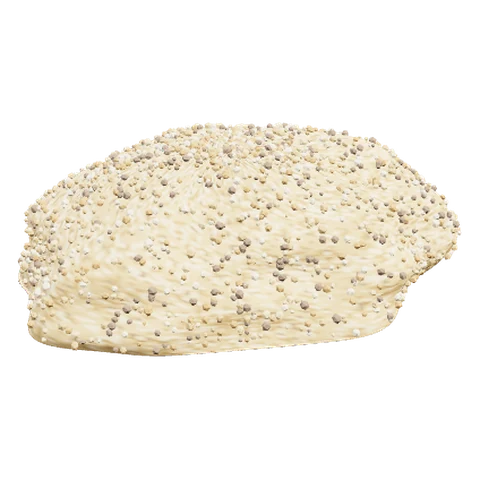 Sandy soil
Pale and gritty. It falls apart when you squeeze it, even when it is wet.
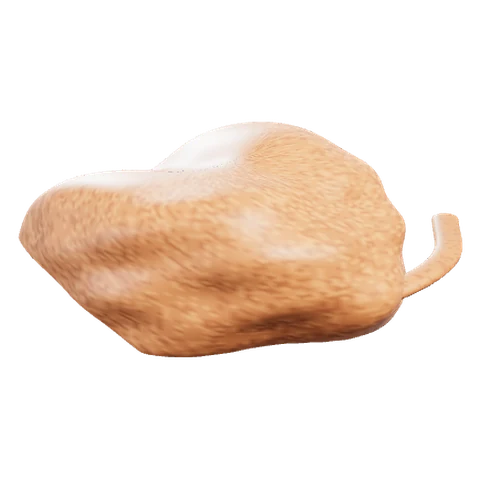 Clay soil
Smooth and sticky when it is wet. Squeeze it between your finger and thumb and it makes a long ribbon.
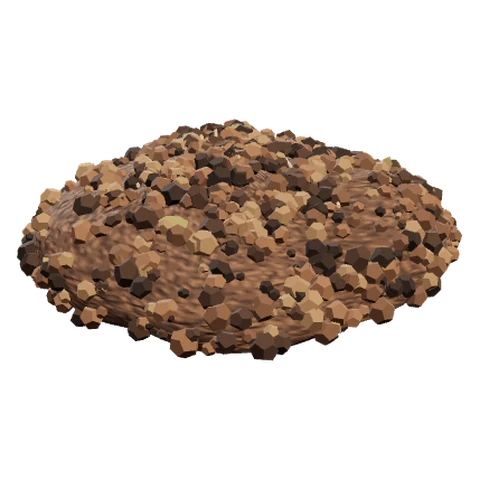 Garden soil
Dark and crumbly. A mix of sand, silt, clay and rotting plants. It makes a short ribbon. Gardeners call it loam.
The water test
Predict, pour, measure, graph2. Pour 200 mL of water onto each soil, all at the same time, and wait five minutes.
Make your prediction, then pour.
3. Read each jug. How many millilitres came through?
Pour the water first, then read the jugs.
| Soil | Water poured in | Water that came through | Water the soil held |
|---|
5. Make a column graph. Drag the top of each column, or use the arrow keys, to show how much water came through.
Look at your results. Which soil held the most water?
To make this a fair test, only one thing was different for each soil. What was it?
Read the plant tags
Which soil suits each plant?Plants from a nursery come with a tag. The tag tells you what soil the plant likes. Use your results to choose the best soil for each plant.
Key idea
Sandy soil lets water through fast and holds very little. Clay soil holds lots of water and lets it through slowly. Garden soil is in between.
Sand grains are big, with big gaps between them, so water runs straight through. Clay bits are tiny and packed close together, so water gets stuck between them. Garden soil has some of each, plus rotting plants that soak up water like a sponge, which is why most plants grow well in it.My notebook
4Use
From the ground.
Look around your home. Almost everything in it was dug out of the ground, or grew in soil. Soils, rocks and minerals are Earth resources: things from the Earth that people need.
Find the Earth resources in this home
Found 0 of 10Tap a glowing circle to look at something in the home.
Dug up in Australia
Tap a place on the mapEach dot is a mine. Tap one to find out what is dug up there and what it is used for.
Most big country towns also have a quarry nearby, digging sand, gravel and crushed rock for roads and concrete. Is there one near you? What does it dig up?
Key idea
Soils, rocks and minerals are Earth resources. We grow food in soil, we build with rock, and we make metal, glass, salt and pencils from minerals.
About 95 out of every 100 things we eat are grown in soil. Soil also holds rain and cleans it as it soaks down into the ground.What is an aluminium drink can made from?
4Use
Rocks on Country.
First Nations Australians have known for many thousands of years which rock is best for each job. Choosing the right stone means knowing its properties: how hard it is, how it breaks, how it feels and what colour its powder is.
One of the oldest places people have lived in Australia
Madjedbebe is a rock shelter on Mirarr land, near Kakadu National Park. Its deepest layers are about 65,000 years old. They hold the oldest seed-grinding stones found in Australia, the oldest stone axes with ground edges found anywhere in the world, and lots of ground ochre. The Mirarr Traditional Owners worked with the scientists and had control over the dig.
The right stone for the job
Choose a stone for each jobAn axe quarry, and axes traded far
At Wil-im-ee Moor-ring, also called Mount William, Wurundjeri people quarried a hard greenstone and made it into axes. The axes were traded into New South Wales, South Australia and as far as the Northern Territory. The quarry belongs to the Wurundjeri again, and you need their permission to visit.
Ask first
Stones, ochre and quarries can be important to the people whose Country they are on. Before you collect rocks or visit a quarry or a rock art site, find out whose Country it is, and ask.
Key idea
Choosing a rock for a job means knowing its properties. First Nations Australians have used this knowledge for at least 65,000 years.
Gritty sandstone grinds seeds into flour. Hard quartzite breaks with a sharp edge for a blade. Soft red ochre is ground into powder for paint. It is the same science you used on the mineral bench.Why is sandstone a good rock for a grindstone?
My notebook
5Show what you know
Show what you know.
Five questions, one try each. They match the five “I can” statements from the start. At the end you will see which parts to look at again.
Ben’s rock is tan. It feels gritty, like sandpaper, and through a magnifying glass he can see sand grains stuck together. Which rock is it?
A mineral looks dark grey and shiny. When you rub it on a white tile, it leaves a red-brown streak. Which mineral is it?
Which of these says what soil is made of?
Class 3C poured 200 mL of water onto each soil. After five minutes, this much had come through: sandy soil 170 mL, garden soil 100 mL, clay soil 20 mL. Which soil held the most water?
First Nations Australians in Arnhem Land made blades from quartzite. Why is quartzite good for blades?
Soil detectives
Two pages for real soil: soil in a jar, what is in my soil, and which soil holds the most water, with a results table and a column graph to fill in.
For teachers
Curriculum
Australian Curriculum: Science, Version 9. Year 3, Science Understanding, Earth and space sciences.
AC9S3U02: compare the observable properties of soils, rocks and minerals and investigate why they are important Earth resources
The lesson also works on these Year 3 descriptions:
AC9S3H01: examine how people use data to develop scientific explanations
AC9S3H02: consider how people use scientific explanations to meet a need or solve a problem
AC9S3I01: pose questions to explore observed patterns and relationships and make predictions based on observations
AC9S3I02: use provided scaffolds to plan and conduct investigations to answer questions or test predictions, including identifying the elements of fair tests, and considering the safe use of materials and equipment
AC9S3I03: follow procedures to make and record observations, including making formal measurements using familiar scaled instruments and using digital tools as appropriate
AC9S3I04: construct and use representations, including tables, simple column graphs and visual or physical models, to organise data and information, show simple relationships and identify patterns
AC9S3I05: compare findings with those of others, consider if investigations were fair, identify questions for further investigation and draw conclusions
From the Year 3 achievement standard:
They describe the observable properties of soils, rocks and minerals and describe their importance as resources. [...] They describe how people use data to develop explanations. They identify solutions that use scientific explanations. Students pose questions to explore patterns and relationships and make predictions based on observations. They use scaffolds to plan safe investigations and fair tests. They use familiar classroom instruments to make measurements. They organise data and information using provided scaffolds and identify patterns and relationships. They compare their findings with those of others, explain how they kept their investigation fair, identify further questions and draw conclusions.
All are quoted from ACARA’s Australian Curriculum Version 9.0.
The lesson covers all eight elaborations of AC9S3U02:
- Examining soils with magnifying glasses, including the living things in them: screen 5, the soil close-up and its sort.
- Describing rocks by texture, colour, grain or crystal size: screen 2, the rock tray and the sorting hoops.
- Minerals as the building blocks of rocks, and rock characteristics depending on their minerals: screen 3.
- Rocks in the built and natural environment, and gemstones in jewellery, graphite in pencils and table salt in food: screens 2, 4 and 7 (Uluṟu and Kata Tjuṯa, the mineral guide, the home).
- First Nations Australians’ knowledges of rock and mineral types and their use for stone blades, grindstones and pigments: screen 8.
- Living things depending on soils for food, growing plants, habitat, and holding and cleaning water: screens 5, 6 and 7.
- Plant tags and the vocabulary used to describe soils: screen 6.
- Rocks and minerals mined or quarried locally or regionally, and their uses: screen 7, the map, with five Northern Territory mines and the local quarry question.
How the lesson is taught
The lesson follows the inductive thinking model (Hilda Taba’s list, group and label sequence, as set out in Joyce, Weil and Calhoun’s Models of Teaching). Students observe and describe before anything is named, sort by what they observed, and only then meet the scientists’ names and explanations, which they apply to new cases.
- Look and sort (screens 2 and 5): seven rocks described by observable properties, then sorted in two-hoop Venn diagrams; twelve things found in soil, then sorted into four groups.
- Name (screen 3): the crystals in granite named as minerals, and three rocks described as mixtures of minerals.
- Test (screens 4 and 6): hardness and streak tests generate data that students use to name six minerals (AC9S3H01); a scaffolded drainage test with a prediction, a formal measurement with a scaled jug, a results table and a column graph (AC9S3I01 to AC9S3I05).
- Use (screens 6 to 8): plant tags, Earth resources in a home and on a map, and the choice of stone for grinding, cutting and paint (AC9S3H02).
Allow three or four sessions: screens 1 to 3, then 4, then 5 and 6 with real soil, then 7 to 9. The jar and drainage tests are best done for real, with the printable sheet, alongside screens 5 and 6.
Misconceptions the screens target
- Rocks and minerals are the same thing (screen 3). Minerals are the ingredients; rocks are the mixtures.
- All rocks are heavy and sink (screen 2). Pumice floats.
- A mineral’s colour tells you what it is (screen 4). Gold and pyrite look alike; streak and hardness tell them apart, and haematite’s grey hides a red powder.
- Soil is just dirt (screen 5). It is a mixture of rock particles, organic matter, water, air and living things.
- Clay soil drains well because it holds water (screen 6). Holding water and letting it through are opposites: clay holds the most and drains the least.
- First Nations knowledge of rock belongs to the past (screen 8). It is living knowledge, held on Country by the people whose Country it is.
Hands-on versions and safety
- Soil in a jar: clear jar, garden soil, water, a tight lid. Results over a day.
- Drainage test: three funnels or cut-off drink bottles, paper towel or cloth as a filter, the same cup of each soil, 200 mL of water each, three measuring jugs, a five-minute timer.
- Streak: the unglazed back of a white tile. Scratch: fingernail, a coin, a steel nail (adult supervision). Marble and limestone fizz in vinegar.
- Never taste or lick rocks and minerals. Wash hands after handling soil and specimens.
- Potting mix can carry Legionella bacteria. NSW Health advises following the label warnings, wetting the mix to reduce dust, wearing gloves and a mask (a P2/N95 mask if possible), and washing hands afterwards. Garden soil avoids most of this in a classroom.
- Collecting rocks: school grounds or a garden, with permission. Leave rocks in national parks and other protected places. ACARA’s background note for AC9S3I02 suggests consulting local First Nations community members before field work, to learn about local hazards and protocols.
About the specimens and the numbers
- The rocks and minerals are 3D models rendered for this site, not photographs.
- Hardness: a fingernail is about 2 to 2.5 on the Mohs scale and copper about 3; nails are made of many metals and range from about 4 to 7 (geology.com). Gold is harder than a fingernail but softer than a coin (Geoscience Australia). Pyrite cannot be scratched with a fingernail or a pocket knife (Mindat). Haematite is 5 to 6 and has a reddish-brown streak (Mindat), so a soft nail may mark it in a real classroom. Halite is 2.5 with a white streak; graphite is 1 to 2 with a black streak.
- The drainage numbers on screen 6 are a model: sandy soil 160 mL, clay soil 20 mL and garden soil 90 mL of 200 mL in five minutes. Real results depend on how packed and how dry the soil is, which is a good discussion after comparing with another class. The Queensland Government’s soil texture guide gives ribbon lengths of under 15 mm for sand, about 25 mm for loam and 50 to 75 mm for clay.
- Soil facts on screens 5 and 7 are from the FAO: more living organisms in a tablespoon of soil than people on Earth; it can take up to a thousand years to form 1 centimetre of soil; 95% of food is produced in soils; soils capture, store and filter water.
- Mines on the map: the Northern Territory sites are from the NT Government’s list of operating mines (Tanami gold, McArthur River zinc, lead and silver, GEMCO manganese on Groote Eylandt, Gove bauxite including the Gumatj Corporation’s Dhupuma Plateau mine). The others are from Geoscience Australia’s mineral facts.
- Madjedbebe: about 65,000 years; the oldest seed-grinding tools in Australia and the oldest ground-edge axe technology in the world (University of Wollongong, 2017); a large quantity of ground ochre and evidence of ochre processing from the lowest layer to the present, and Mirarr control over the excavation under the agreement with the Gundjeihmi Aboriginal Corporation (Gundjeihmi Aboriginal Corporation, 2017). Leilira blades: usually quartzite, flaked from a core with a hammerstone, used for butchering and as spearheads (Australian Museum). Grindstones: a large lower millstone and a smaller upper muller, used for seeds, ochres and more (Australian Museum). Wil-im-ee Moor-ring: greenstone axes traded into New South Wales, South Australia and as far as the Northern Territory; returned to the Wurundjeri in 2012; access by permission of the Wurundjeri Council.
Answers at a glance
- Hoops, round 1 (dark, has holes): dark only, basalt; both, scoria; holes only, pumice; neither, granite, sandstone, conglomerate. Shale is accepted in or out of “dark”. Round 2 (grains you can see, has layers): grains only, granite, conglomerate; layers only, shale; sandstone is accepted in “grains only” or in the middle; neither, basalt, scoria, pumice.
- Mystery minerals: A fool’s gold (pyrite), B quartz, C graphite, D haematite, E gold, F halite.
- Soil sort: bits of rock, pebble, sand, clay; once living, dead leaf, twig; living now, root, earthworm, ant, beetle, slater; water and air, water drop, air space.
- Plant tags: kangaroo paw, sandy soil (garden soil also accepted); paperbark, clay soil; tomato, garden soil.
- The right stone: grinding, sandstone; a blade, quartzite; red paint, red ochre.
- Exit check: x1 sandstone; x2 haematite; x3 rock bits, dead plants, water, air and living things; x4 clay soil; x5 hard, with a sharp edge.
Saved progress
Answers, readings and notes are saved only in this browser on this device. Nothing is sent anywhere.
Sources
- ACARA: Australian Curriculum Version 9, Science, Year 3
- ACARA: Science teacher background information, AC9S3I02 elaboration 6
- Australian Museum: What are minerals? and Mineral properties
- Geoscience Australia: Australian mineral facts (aluminium, iron, gold, copper, lead, opal)
- Geoscience Australia: Critical minerals and their uses
- Geology.com: Fool’s gold, Graphite, Halite and Mohs hardness scale
- Mindat: Hematite and Pyrite
- FAO: Cherishing the ground we walk on and FAO (2015): There are more organisms in one tablespoon of healthy soil than there are people on Earth
- Queensland Government: Soil texture
- NSW Health: Legionnaires’ disease fact sheet
- Australian National Botanic Gardens: Kangaroo paws; Hornsby Shire Council: Broad-leaved paperbark; Gardening Australia: Planting tomatoes
- SA Department for Energy and Mining: Silica, Limestone and Construction materials
- NT Government: Operating mines
- University of Wollongong (20 July 2017): Kakadu site dates Australia’s human history back to at least 65,000 years ago
- Gundjeihmi Aboriginal Corporation (2017): Madjedbebe media release
- Australian Museum: Leilira blades from Arnhem Land and Grindstones
- Wurundjeri Woi-wurrung Cultural Heritage Aboriginal Corporation: Wurundjeri properties and significant places
- Parks Australia: Uluṟu-Kata Tjuṯa geology
- NT Government: Karlu Karlu / Devils Marbles Conservation Reserve
- QUT: the 2019 Tonga pumice raft reaches Australia